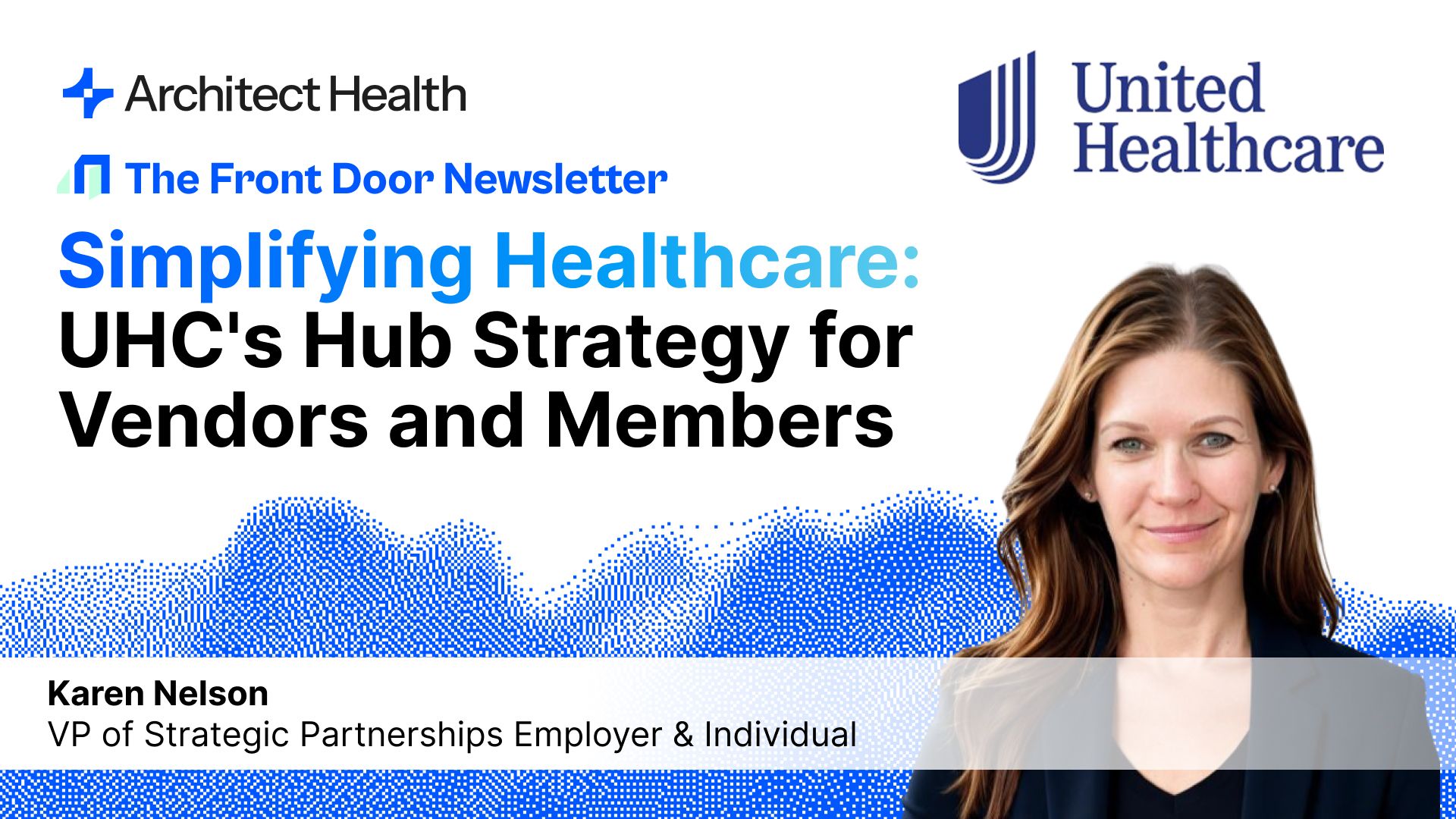
Karen is pivotal in advancing innovation and vendor relationships within the commercial market. She champions groundbreaking initiatives, including the UHC Store and UHC Hub, that help create more choice and flexibility in health and wellness offerings for consumers and employers.
Karen builds value-based relationships and partnerships that not only improve consumer satisfaction but also deliver highly personalized offerings and solutions for employers and millions of Americans who have employer-sponsored health benefits.
Prior to this role, Karen led the telehealth evolution at UnitedHealthcare, significantly enhancing the company's digital health partnerships. She also held leadership positions at Optum, where she developed programs to help consumers with complex health conditions, including end-stage renal disease.
Karen earned a bachelor’s degree and MBA from the University of St. Thomas. Karen is also a certified executive coach through the International Coaching Federation. She is deeply committed to developing leaders and giving back through volunteer work with multiple non-profit organizations.
Interview Key Takeaways:
- Simplification First: UnitedHealthcare prioritizes simplifying the healthcare experience through tools like the UHC Hub, curbing vendor fatigue for self-insured employers by curating vetted digital health solutions.
- Affordability Focus: Balancing access and costs remains critical, with innovations like Surest driving transparency in pricing and efficient care choices for members and employers.
- AI Personalization: AI powers seamless member matching to providers and solutions, from claims processing to advocacy, reducing friction without multiple platforms.
- Vendor Curation: Rigorous evaluation involves clinical, security, and procurement teams, favoring partners that integrate ecosystem-wide, prove outcomes, and simplify admin.
- True ROI Defined: Success hinges on adoption and engagement over short-term savings, yielding better utilization, satisfaction, and value-based care alignment.
Evolution of Consumer Solutions
Sohum: Over 20+ years at UnitedHealth/Optum, your view of what members need has likely shifted dramatically, from early appointment scheduling work to today's complex ecosystem. What's changed most in how you think about consumer experience?
Karen: There are two key areas that UnitedHealthcare is focused on for helping members navigate the healthcare system: simplification and affordability. We know that it can be difficult for consumers to navigate the complexities of the healthcare system, so we believe in making the healthcare experience simpler and more accessible for everyone. When it comes to using one’s health benefits, the experience should be like everything else you shop for or schedule, with options that are personalized, simple, and data driven.
Affordability is also a key issue for employers and consumers. When healthcare costs increase year over year, employers, governments, and insurers have to make difficult decisions about balancing affordability and access. We are bringing a laser focus to this issue through ongoing investments and solutions like Surest, which simplifies the experience while lowering total cost of care and helps members understand their costs and choose effective, cost-efficient care.
The UHC Hub Strategy
Sohum: Everyone talks about vendor fatigue: payers and their members overwhelmed by too many disconnected tools. Walk us through the thinking behind the UHC Hub to tackle vendor fatigue. What problem were you solving for self-insured employers, and how do you decide which vendors make the cut? What’s the difference between the Hub and the Store?
Karen: The UHC Hub was created to help reduce the administrative burden employers face when evaluating, choosing, and engaging digital health solutions for their workforce. Many employers are already working with multiple digital health solutions, and as the number of vendors continues to expand, the Hub simplifies the process of selecting, purchasing, and managing vendor programs by providing a curated network of vendors that enables a simpler and more connected experience.
In contrast, the UHC Store is a direct-to-consumer digital shopping experience where members can purchase health and wellness services that complement their employer-sponsored benefits. The Store helps members customize their healthcare experience and save money on services outside of open enrollment, while the Hub focuses on employer-sponsored vendor selection and management.
Personalization at Scale
Sohum: How do you serve the right solution to the right member without requiring them to navigate dozens of platforms? What role does data and AI play in that matching?
Karen: AI is playing a large role in helping UnitedHealthcare deliver more personalized experiences for members and reduce friction in the healthcare experience. For example, we have an AI claims assistant tool that simplifies out-of-network claim submissions by automatically populating medical field values, which has nearly doubled completion rates while significantly reducing the time required to complete claims.
We also use AI in provider search and advocacy tools to match members with providers based on quality, benefits, convenience, and personal fit, and to help advocates better understand member needs and personalize support. These tools help ensure members are connected to the right care and the right solutions without needing to navigate multiple platforms.
AI Buy vs Build
Sohum: UHC is making big bets on AI across UHC and Optum. Over the next 5–10 years, where do you think AI will be most promising in healthcare? In those areas, how do you decide what to build versus what to buy or partner for?
Karen: The use of AI holds tremendous promise to simplify and improve the healthcare system, and we have been using AI for years across our organization. UnitedHealth Group invests heavily in technology and innovation and uses AI to produce insights, improve operations, and enhance the consumer experience across the healthcare system.
As we think about build versus buy, we focus on ensuring AI technologies are safe, explainable, trustworthy, and used responsibly with human oversight and input from clinicians and experts. We work closely with partners, including Optum and other organizations, to improve the healthcare experience, and we evaluate where internal capabilities make sense versus where partnerships can accelerate innovation and improve outcomes.
Telehealth Five Years Later
Sohum: You led the telehealth evolution during COVID across millions of providers. What surprised you most about how virtual care has evolved since then? Where's the real opportunity now?
Karen: Virtual care utilization expanded rapidly during COVID and has since evolved to continue meeting consumer needs across mental health, acute care, primary care, and specialty care. Most providers now offer virtual care options for a variety of services, and virtual care has become an important part of expanding access and making care more convenient while lowering costs.
The real opportunity is continuing to integrate virtual care into the broader healthcare system and enable providers to offer care both in person and virtually so members have multiple access points. Digital health and telehealth will continue to play a major role in building a more resilient and accessible healthcare system.
Vendor Procurement and Management Process
Sohum: Walk us through UnitedHealthcare's vendor evaluation and onboarding process - who's involved, what criteria matter most, and what tools or systems support that workflow? In an ideal world, what's broken about how payers manage vendors today that you'd fix?
Karen: When we evaluate vendors, we closely align to our enterprise sourcing and procurement processes and bring in stakeholders from across the company, including clinical, legal, technology, and security teams. We evaluate vendors based on performance, outcomes, how they simplify the healthcare experience, and how they help drive affordability.
Security, compliance, and technology requirements are critical components of the evaluation process, along with clinical review and evidence. Ultimately, our goal is to bring forward vendors who can integrate into the broader ecosystem, provide administrative simplicity, deliver value to employers and members, and demonstrate measurable outcomes.
Advice to Startups Selling to Payers
Sohum: For digital health and virtual care startups trying to sell into a payer like UnitedHealthcare, what do they consistently misunderstand about your priorities or processes? What do the best partners do differently from the first conversation onward? What would you say to best steer them towards a path of success?
Karen: We look for partners who are in the forefront of innovation and align with our mission of making the healthcare system work better for everyone. We are particularly interested in partners who responsibly use technology and AI to improve access to care and simplify the healthcare experience for consumers.
We also prioritize partners who help improve affordability and address real needs for employers and members. The most successful partners listen to customer needs, demonstrate measurable value, and show how their solutions integrate into the broader healthcare ecosystem rather than operating as standalone point solutions.
Defining Real ROI
Sohum: When you look at programs coming through UHC Hub or into UHC Store, what actually counts as ROI for you: medical cost savings, outcome improvement, retention, NPS, operational efficiency? How do you weigh those against each other?
Karen: Real ROI starts with adoption. When members actively use programs that complement employer benefit plan designs rather than compete with them, we see stronger engagement and meaningful impact. The UHC Hub and the UHC Store are designed to meet members where they are and give them choices that drive engagement and utilization.
For employers, ROI shows up as smarter benefit utilization, improved access to care, reduced friction, and higher member satisfaction, not just short-term medical cost savings. When adoption is high and the experience is seamless, outcomes follow through better engagement, satisfaction, and a benefits ecosystem that works as designed.
Value-Based Care
Sohum: UnitedHealth has been very vocal about doubling down on value-based care and tying more members and providers into outcomes-based arrangements. Where do you see the most exciting intersection between value-based care and digital/virtual solutions over the next few years?
Karen: Creating a true consumer experience in healthcare is a major opportunity and closely tied to value-based care. Using data and AI-driven tools at scale helps provide insights that allow consumers to make informed decisions about cost and quality, which supports value-based care models.
Digital solutions that provide transparency, choice, and insight into provider quality and cost help improve engagement and outcomes, and we believe these types of solutions will continue to play a major role in the evolution of value-based care.
What’s Next for Payers
Sohum: What shift in healthcare-business models, technology, partnerships excites you most for 2026 and beyond? What should leaders be preparing for now?
Karen: The number one need in healthcare today is affordability and simplicity, in that order, and we will continue innovating to address those challenges. Insurers play a critical role in incentivizing lower costs and keeping people healthy, and we are uniquely positioned to help drive healthcare system transformation.
We believe the challenges within the healthcare system are within our ability to solve through scale, innovation, experience, and technology in partnership with providers, employers, vendors, and other stakeholders, and affordability and simplicity will continue to be key priorities going forward.


